
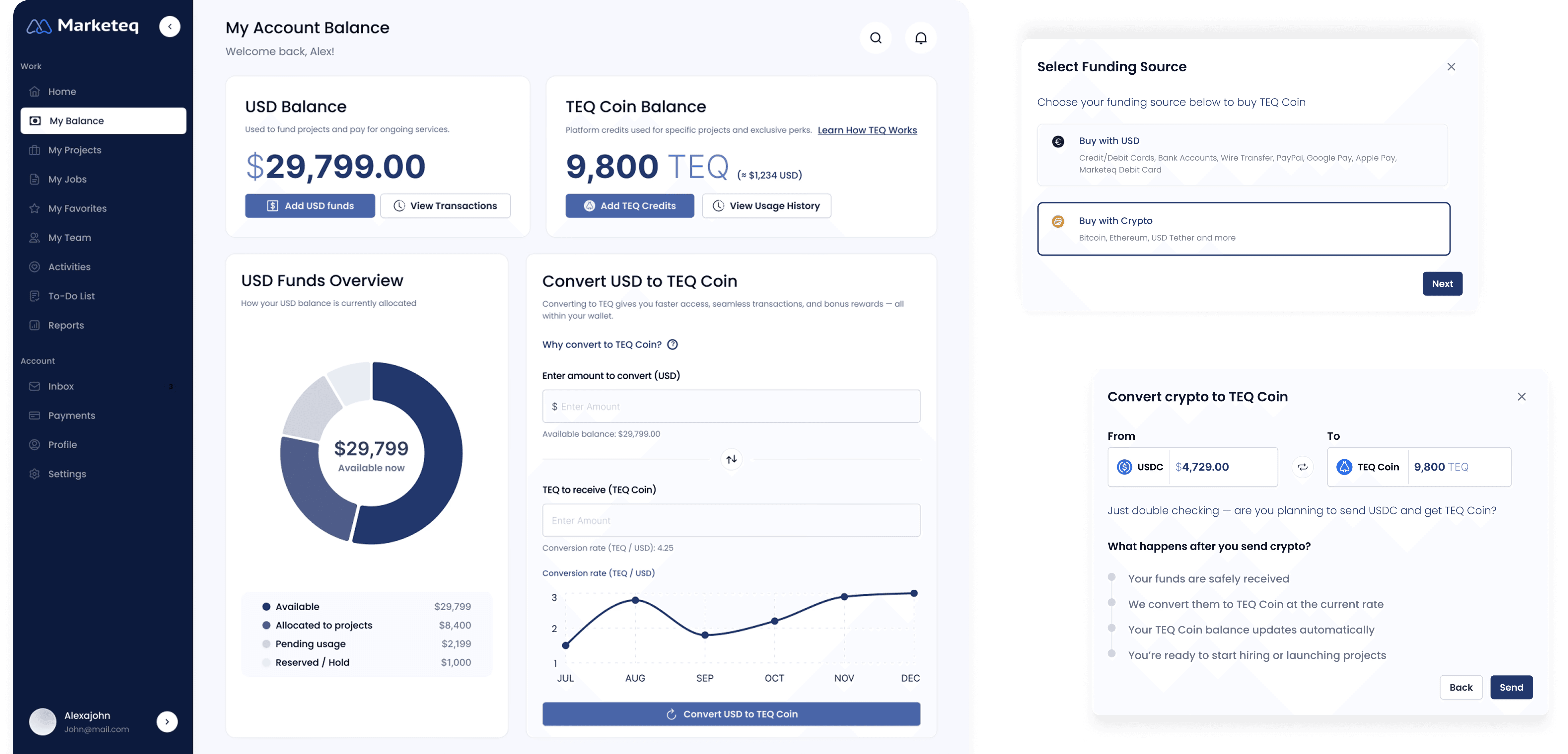
A dual-currency wallet for B2B clients
Project Type
B2B, IT Consulting, Web Design
Team
1 UX Researcher/Designer (Me), 2 Engineers, 1 Project Manager, 1 CEO
My Role
UX Research & Design Intern
Timeline
3 months (Jun–Sep 2025)
Overview
Marketeq Wallet is a 0→1 desktop web wallet built for clients who manage service payments across multiple IT consulting projects. When returning clients couldn't see their remaining balance spread across projects, states, and currencies, they paid again instead of reusing existing funds, creating unnecessary refunds and operational overhead.
What I did
I led end-to-end UX research and design, reframing the problem from refund delays to balance visibility. The result is a centralized wallet that surfaces usable funds by currency and project state, with inline USD–TEQ conversion transparency to support confident payment decisions.
my Impact
From “Wait… do I still have money?” to confident decisions.
+45%
Clearer balance visibility
-62%
Fewer duplicate payment attempts
0→1
Wallet built from scratch
Final Design Preview
Key feature #1
Balance breakdown across project states
See how balances are distributed across project states to understand available funds at a glance.
Key feature #2
Transparent USD–TEQ conversion preview
Preview conversion rates and TEQ amounts before converting to support confident funding decisions.
(I used Figma + FigmaMake for prototyping and animation)
Quick Context (for non-fintech readers)
Who are the users?
Operations leads or finance contacts who manage budgets and authorize payments across multiple consulting projects on the platform.
What is TEQ?
TEQ is an internal balance that clients can use to pay for services on the platform, similar to stored credit rather than a public currency.
Why dual-currency?
Due to business and accounting constraints, payments are made in USD while value can be stored and reused as TEQ for future projects.
The Problem
30% of returning clients paid again instead of reusing existing balances, leading to unnecessary refunds and operational overhead.
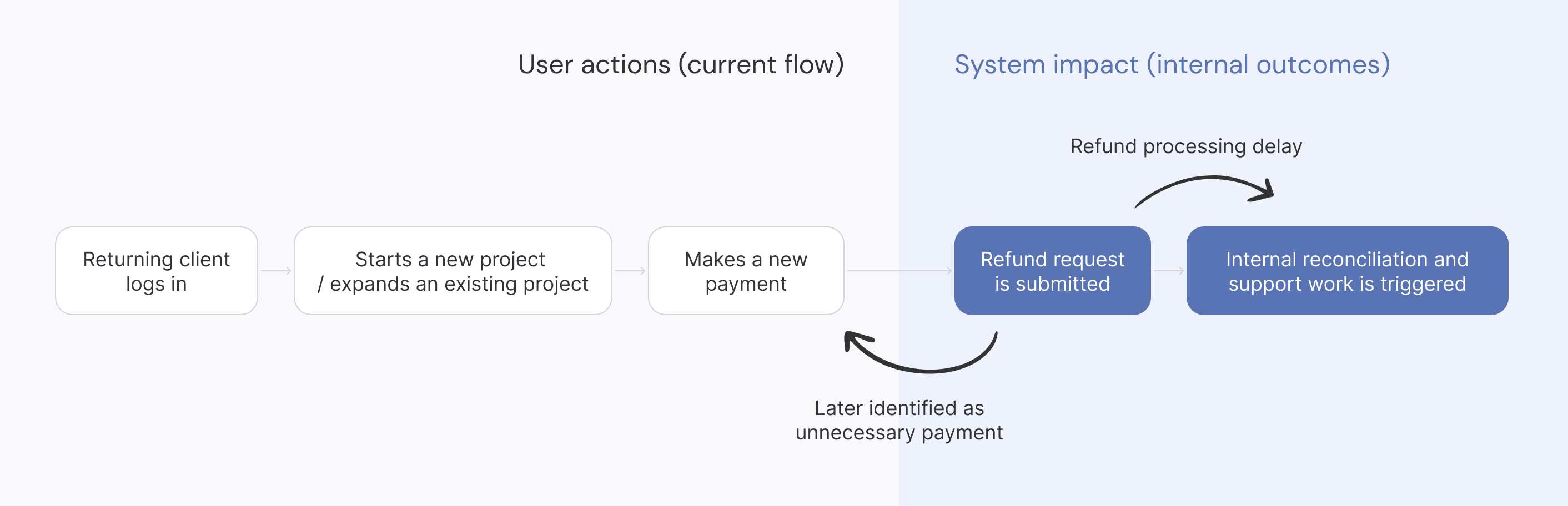
What we initially got wrong
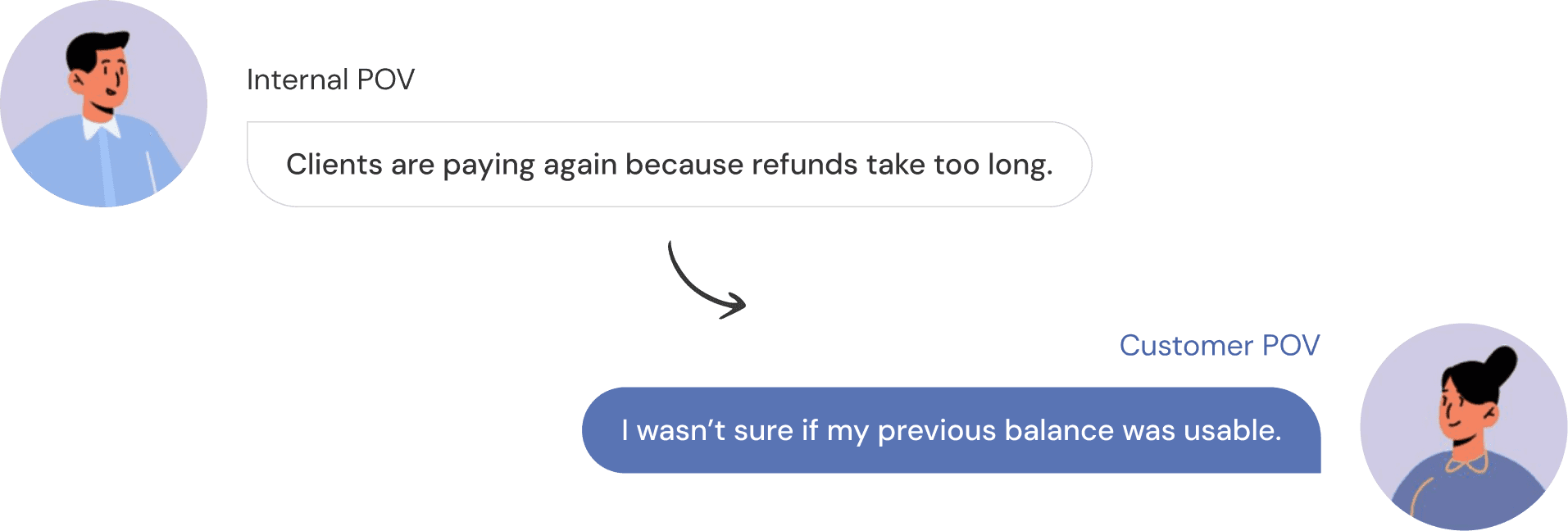
It wasn’t time delays. It was balance visibility.
At first, we assumed clients paid again because refunds took too long.
But interviews revealed a different issue. Clients couldn’t clearly see or trust their remaining balance, so they chose to pay again.
How I changed the strategy from research
Reducing duplicate payments through balance visibility
Through research, I used AI-assisted synthesis to cluster insights and identify patterns across user behavior and system workflows.
This reframed the problem from refund delays to balance visibility, uncovering its impact on decision confidence and repeated payment behavior.
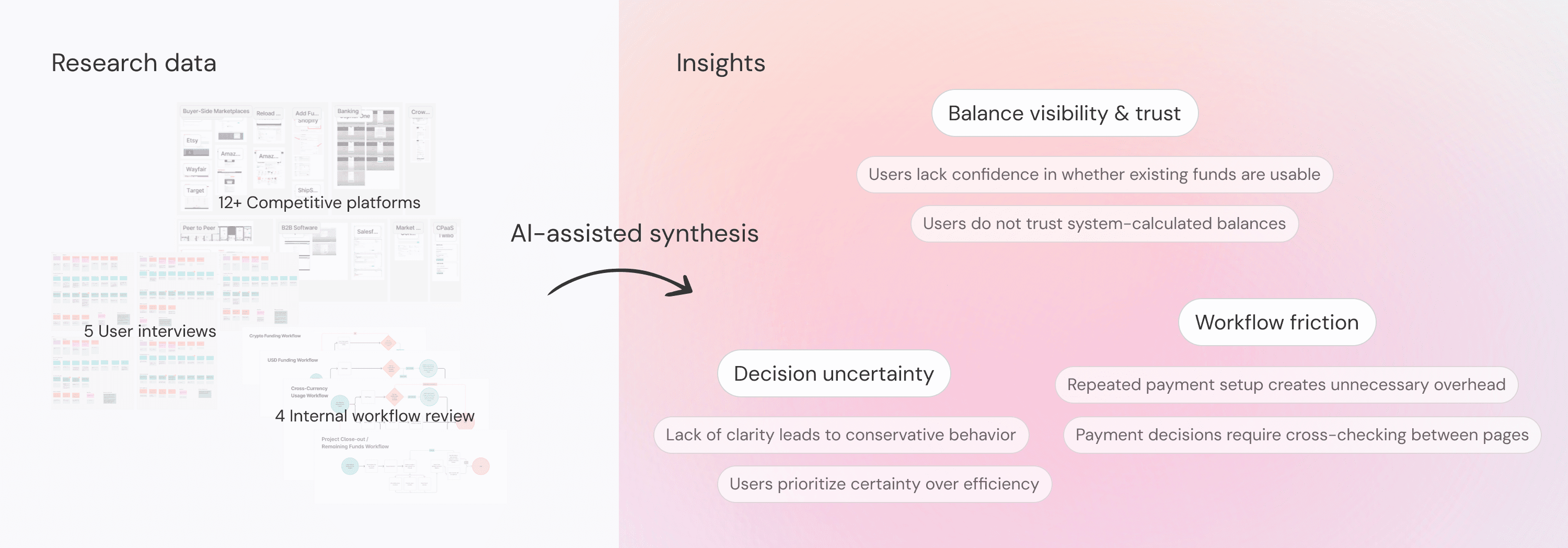
(I used Claude, Dovetail, and FigJam for interview clustering and affinity mapping)
Key Research Insights
1
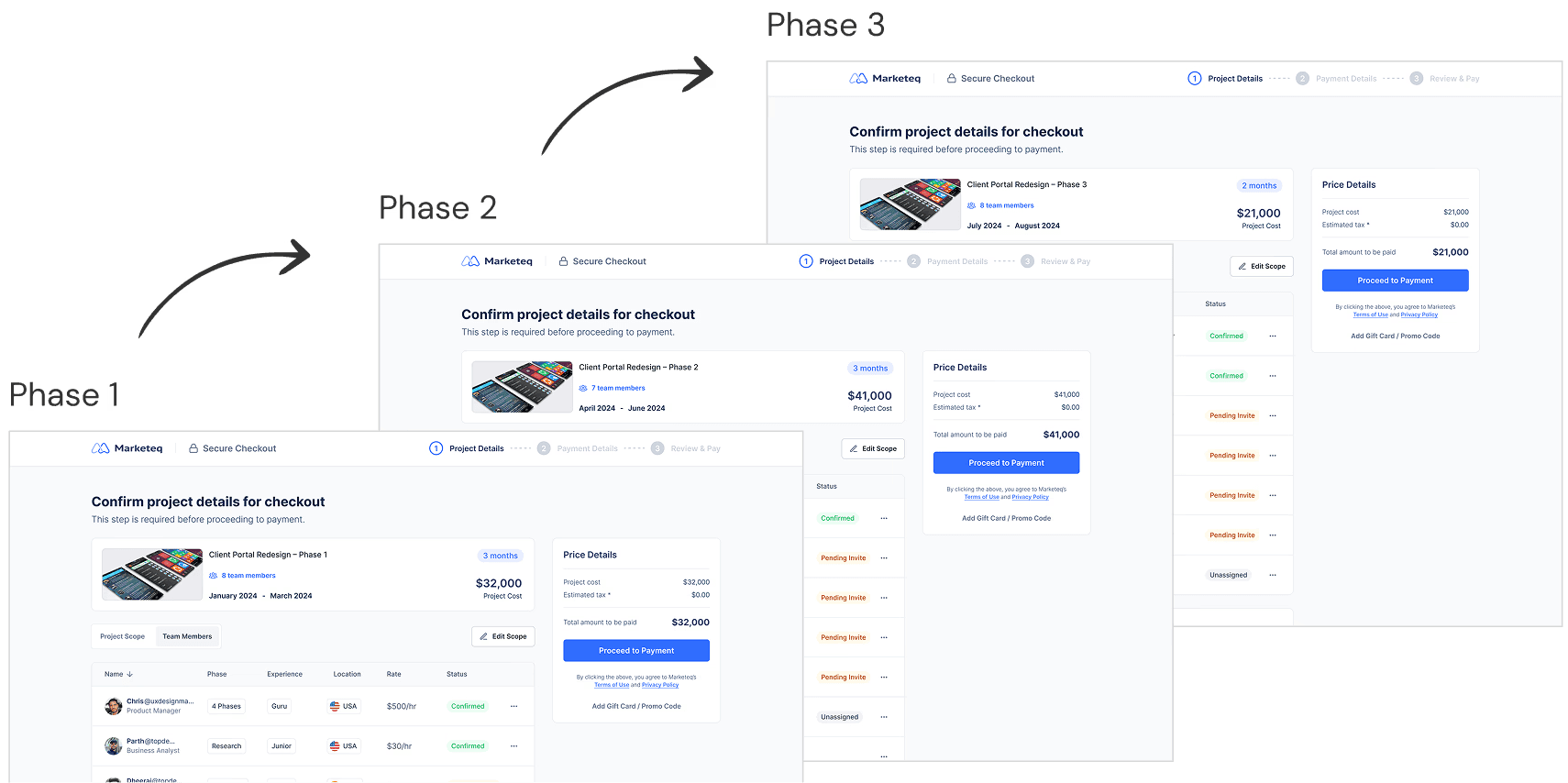
Repeated payment setup slowed down returning clients
Every time we move to a new phase, I have to go through the same payment setup again.
— Returning client, Operations Manager
2
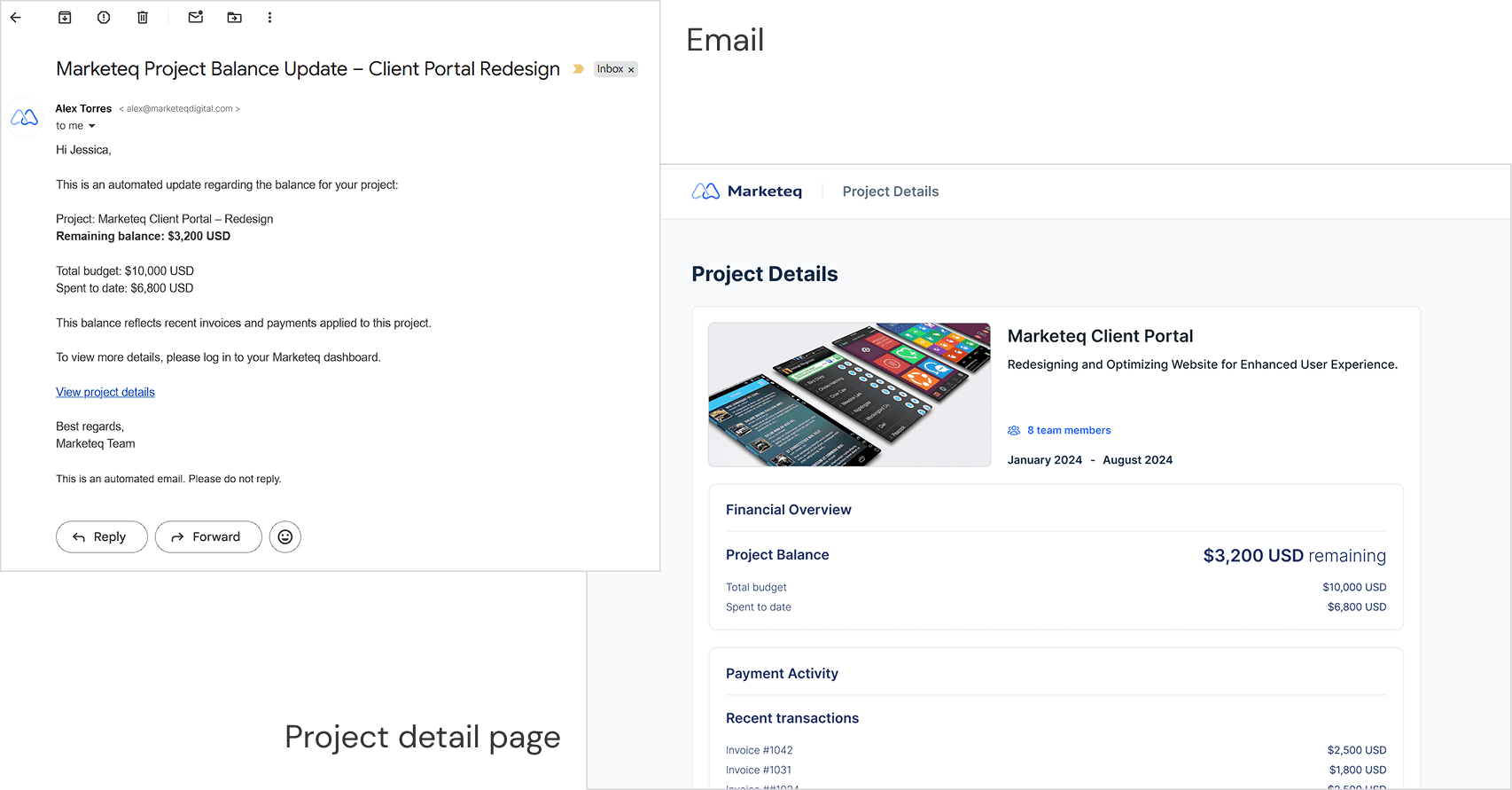
Clients lacked a clear way to understand remaining funds across projects
There's no clear way to tell if we still have funds left.
— Returning client, Finance lead
Design Goal
How might we help clients confidently decide whether to pay again by clearly surfacing usable balances across currencies and project states?
Defining MVP
The MVP scope was defined in alignment with the CEO and PM, who prioritized balance visibility as the most pressing problem. TEQ incentive features were intentionally deferred to a later phase, with the business planning to encourage TEQ adoption over USD once the core wallet experience was stable.
Balance visibility across projects
Enable quickly understand how much funding remains across projects before making another payment.
USD–TEQ conversion transparency
Better understand conversion outcomes before moving funds between currencies.
MVP Focus: Balance visibility across projects
Design Exploration
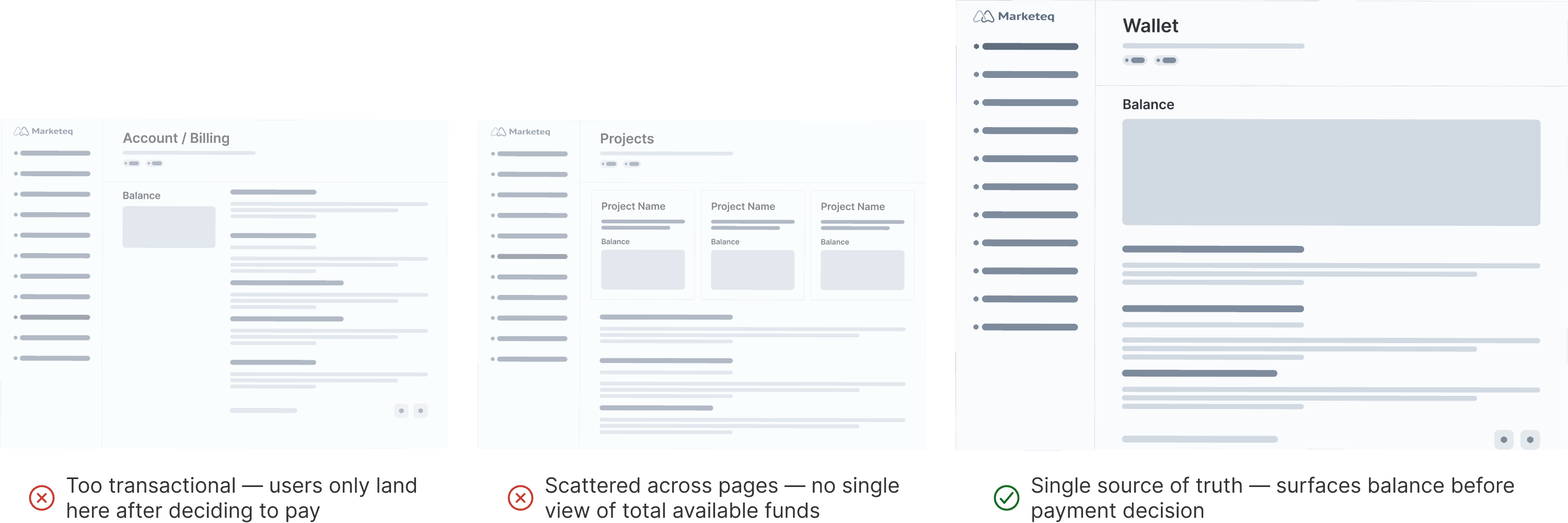
Where should balances live?
I explored several places to surface balance information across the platform, including account billing, project pages, and a centralized wallet.
Why I chose a wallet?
A centralized wallet reduces cognitive load by giving clients one place to see all available funds before deciding whether to pay again, while laying the foundation for the business's next phase of encouraging TEQ adoption.
Iteration
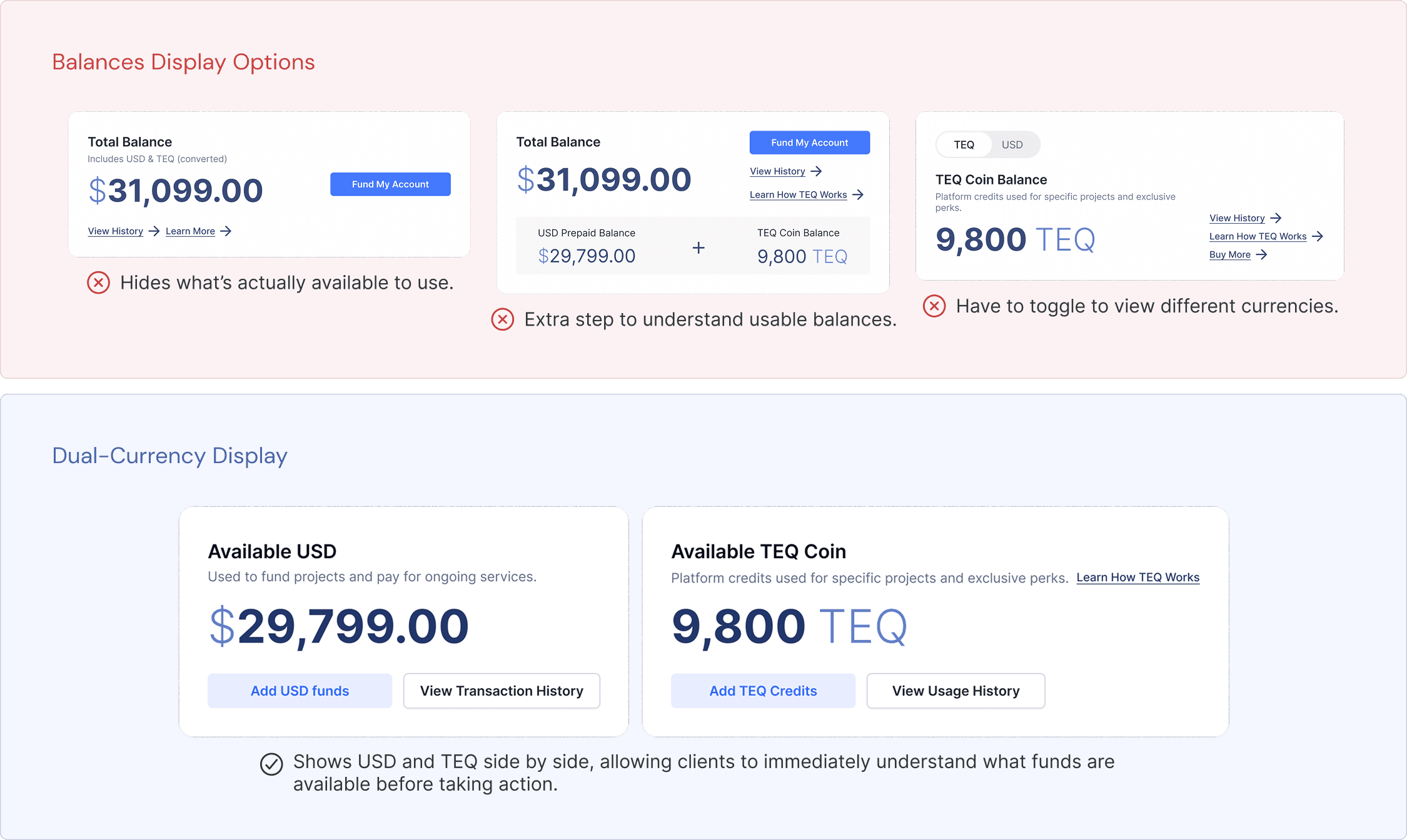
How should balances be displayed across currencies?
To surface balances across USD and TEQ, I explored different layouts, but each had a cost at the moment of decision. The dual-currency display was the only one that showed everything at once.
Iteration
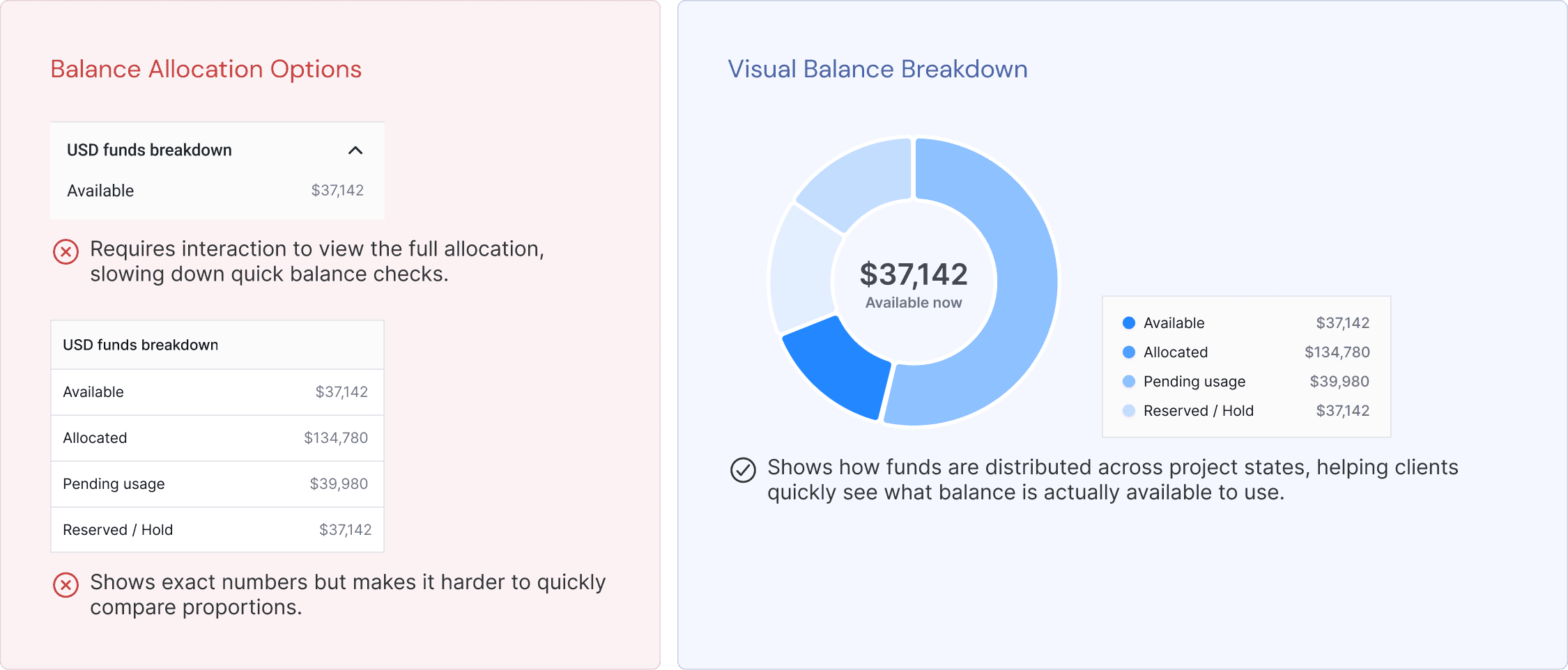
What balances do clients actually need to see?
Clients often couldn't tell how much funding was actually usable, because funds were spread across different project states. The visual breakdown let clients immediately see what was available versus held, without having to do the math themselves.
MVP Focus: USD–TEQ conversion transparency
Design Exploration
How can clients understand USD–TEQ conversion?
Clients needed to understand how much TEQ they'd receive before committing. The key challenge was showing the rate and outcome without adding an extra step.
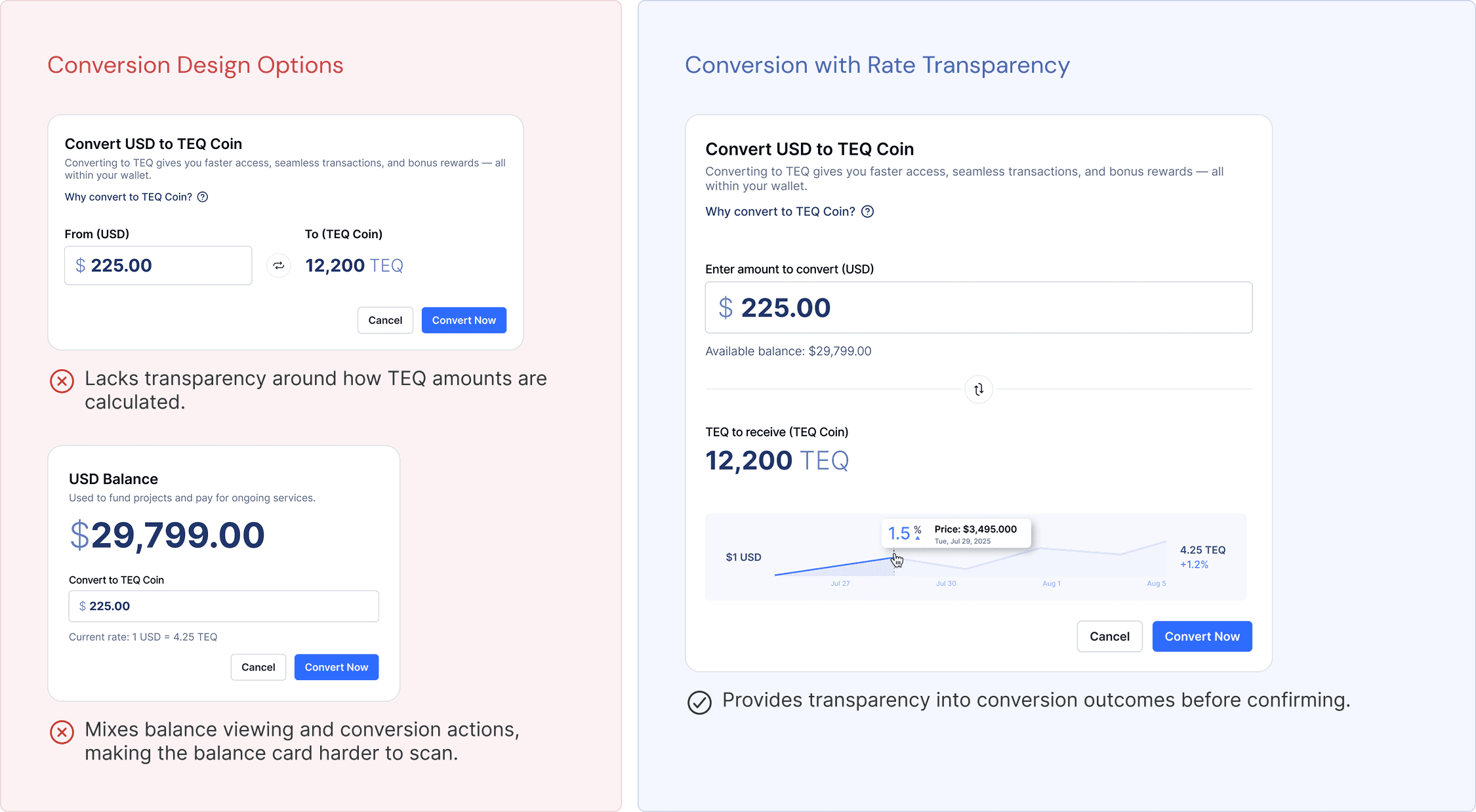
The original direction used a popup, but after discussion with the engineer, we agreed an inline preview was both more intuitive and easier to implement — keeping the conversion outcome visible in context without the overhead of a separate modal. This let clients verify the rate and amount in the same step before confirming.
Empty States & Error Handling
Designing for moments when data is missing or actions can't be completed
Beyond the happy path, I considered two key failure states: when users have no available balance, and when a conversion amount exceeds what they have.
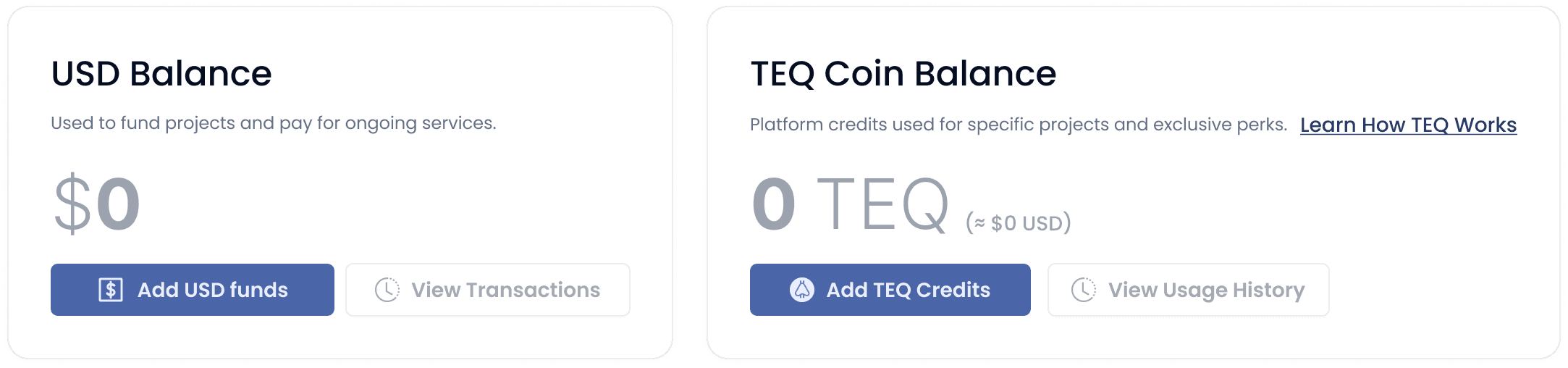
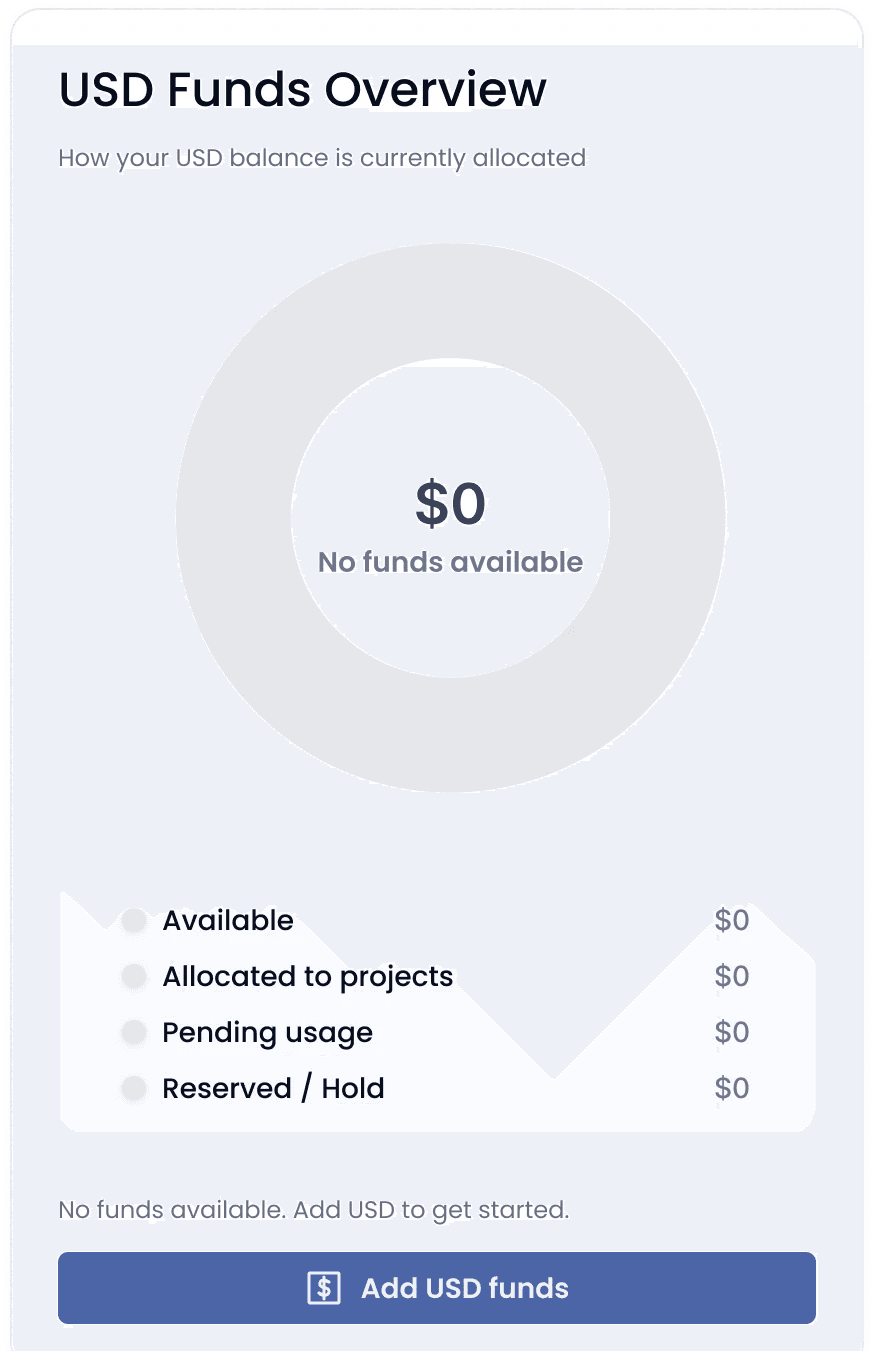
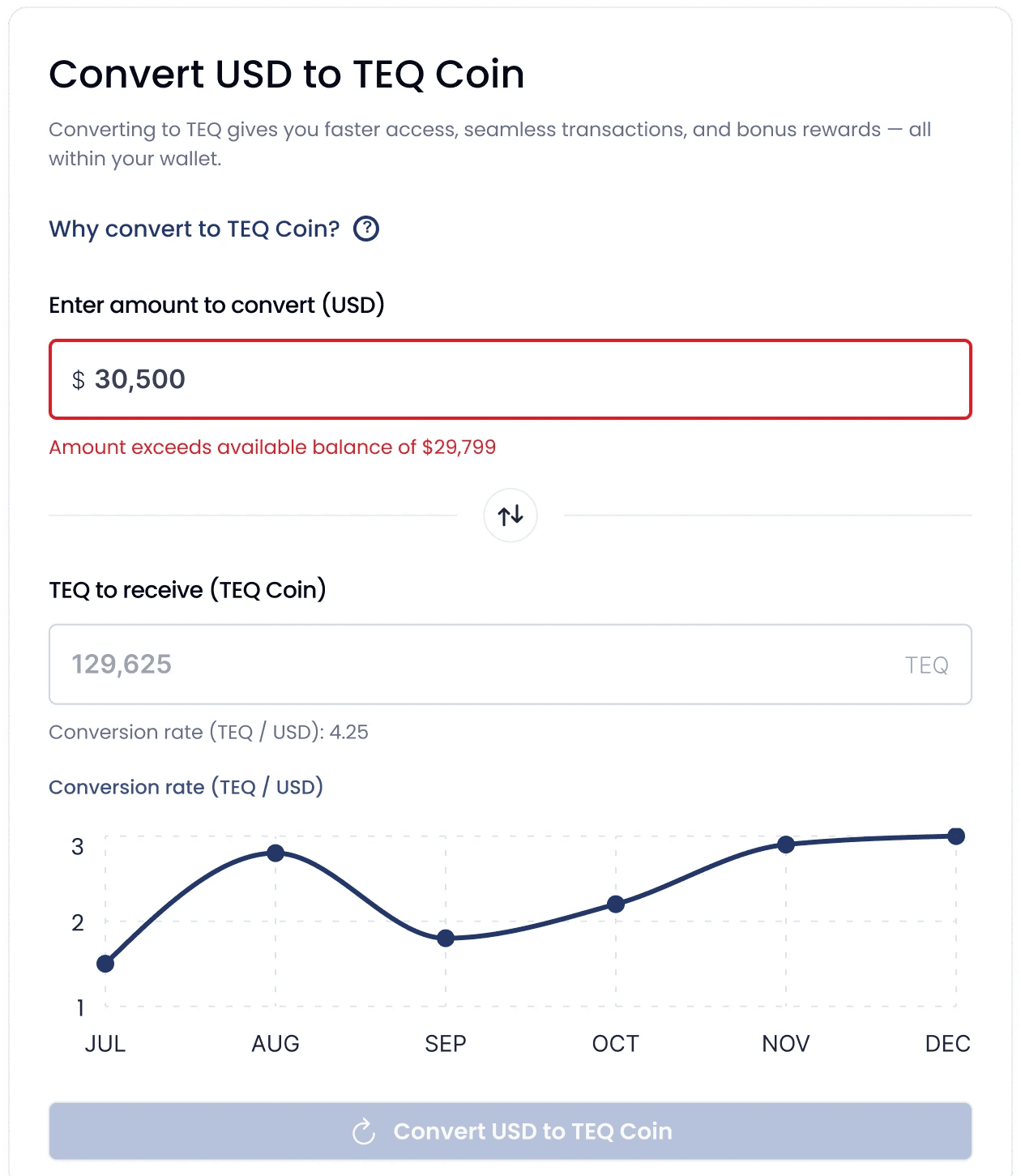
Handling cases when balance is missing or conversion can't proceed
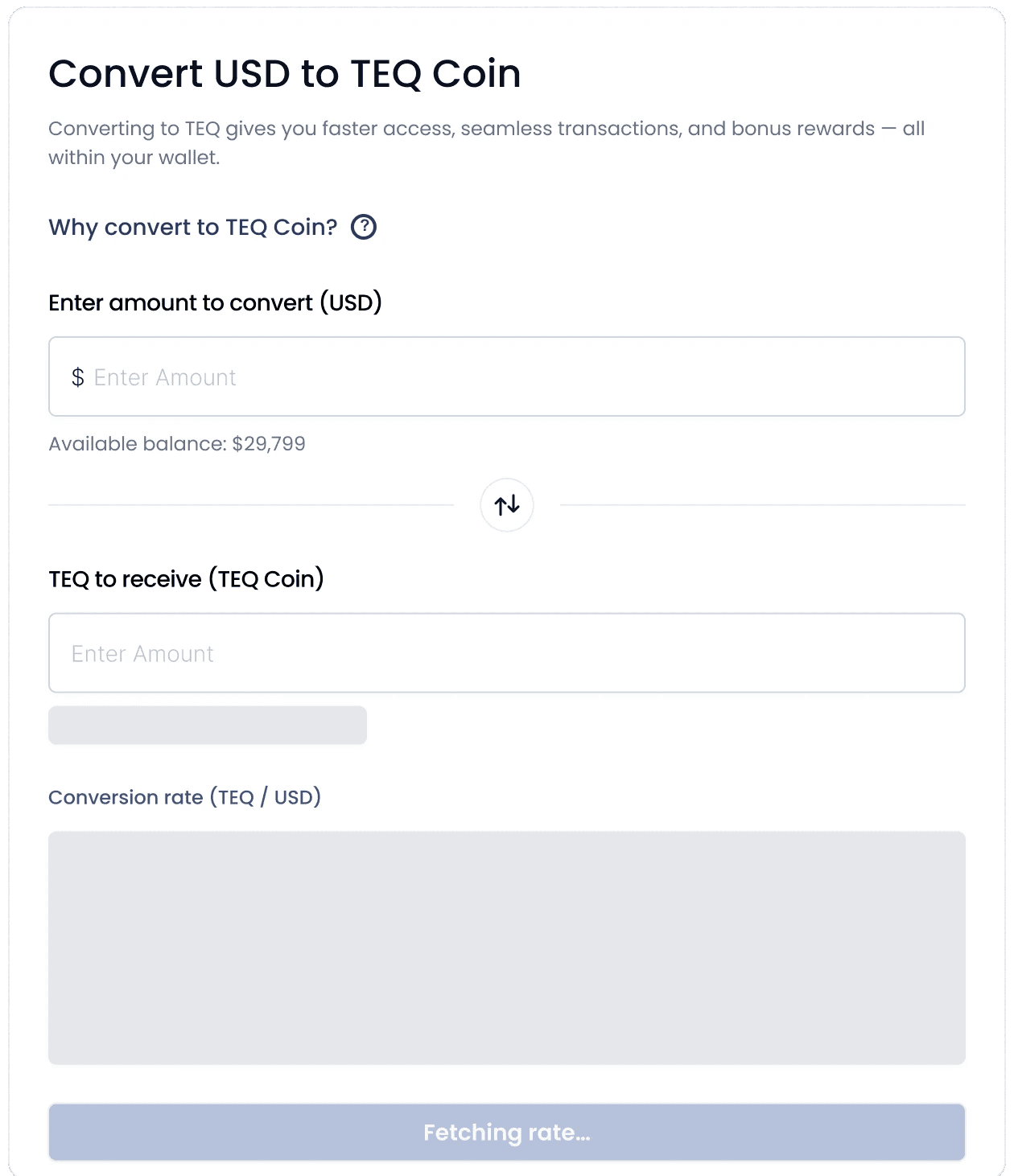
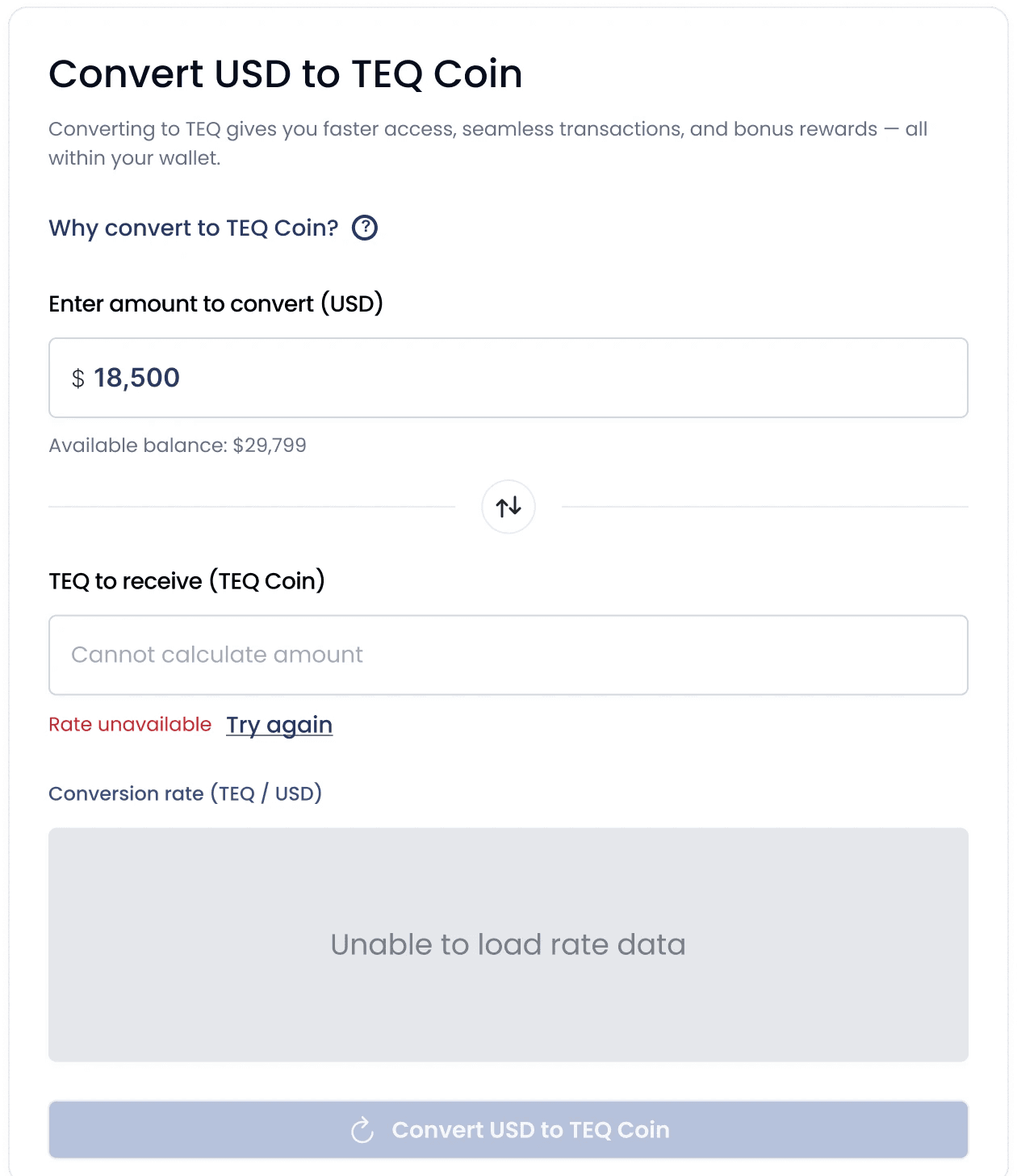
I also considered what happens when the conversion rate itself fails, designing a loading state while data is fetched, and a recoverable error state when it's unavailable.
Final Solution
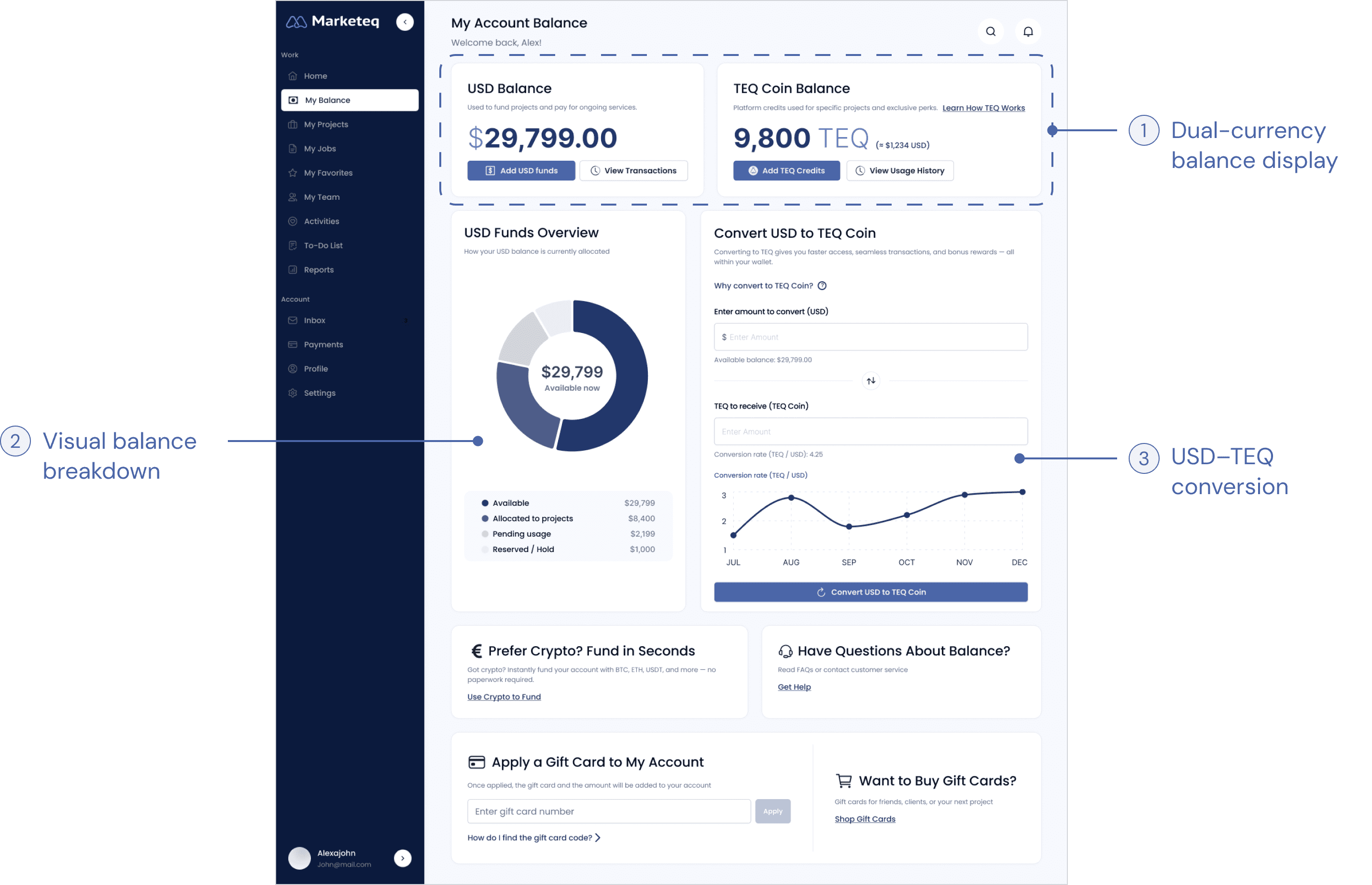
A centralized wallet that helps clients confidently decide whether to pay again.
The two MVP tracks, balance visibility and conversion transparency, came together into a single, unified experience.
Before

Balances were scattered across project pages, emails, and invoices
Clients couldn't tell how much was still usable before checkout
Internal teams handled frequent refund requests and manual adjustments
After

Remaining balances are centralized and visible in one place
Clients see what's available before deciding to pay again
Balance clarity reduces confusion across currencies and projects
Impact & Takeaways
The wallet design improved both clarity and behavior.
I ran a comparative usability study with 8 returning clients, testing identical tasks across the existing workflow and the redesigned prototype.
+45% Clearer balance visibility
Confidence in identifying available funds rose from 2.2 → 3.2 / 5 (Likert scale, n=8).
-62% Fewer duplicate payment attempts
Participants who said they'd pay again dropped from 5 → 2 out of 8, after seeing the redesigned wallet.
My takeaways
Turns out, when users can actually see what's left, they stop paying twice. My biggest takeaway: sometimes the most impactful design decision is just... showing people the information they already needed!
Reflection
Clarity reduces 0→1 ambiguity
Designing a 0→1 product was initially uncomfortable because many assumptions were unproven. I learned that clarity doesn't come from having all the answers, it comes from asking better questions and staying aligned with the people around you. Working closely with the CEO, PM, and engineer taught me how business priorities and technical constraints shape design scope, and how early alignment makes iteration faster.
If I had more time…
I would track post-launch metrics such as repeat payment rate, refund volume, and funding time to validate long-term impact. I would also run more usability testing rounds to iterate and confirm whether the design truly matches what users need. And I would explore predictive prompts that proactively surface remaining balances before checkout.