

Organization
ForeFlight (A Boeing Company)
Team
2 Researchers, 1 PM, 2 Designers (including me)
TOOLS
Figma, Lottielab, Figma Make
Timeline
3 months (Jan–Mar 2025)
Overview
ForeFlight is a market-leading aviation platform used by pilots to plan and execute flights in time-sensitive environments. However, in-app support resources were fragmented and difficult to access within critical workflows, increasing cognitive load during flight planning.
What I did
I designed the study plan, led usability sessions with pilots, and translated research insights into structured design recommendations, resulting in a more accessible and context-aware support experience embedded within pilots’ primary workflows.
my Impact
From "Where do I even find help?" to support that shows up when pilots need it most.
8 High-severity friction points
Uncovered critical breakdowns in support discoverability across 4 moderated usability sessions with pilots.
6 Prioritized design recommendations
Translated research findings into prioritized, implementation-ready solutions.
Final Design Preview
Key feature #1
Always-visible help entry point
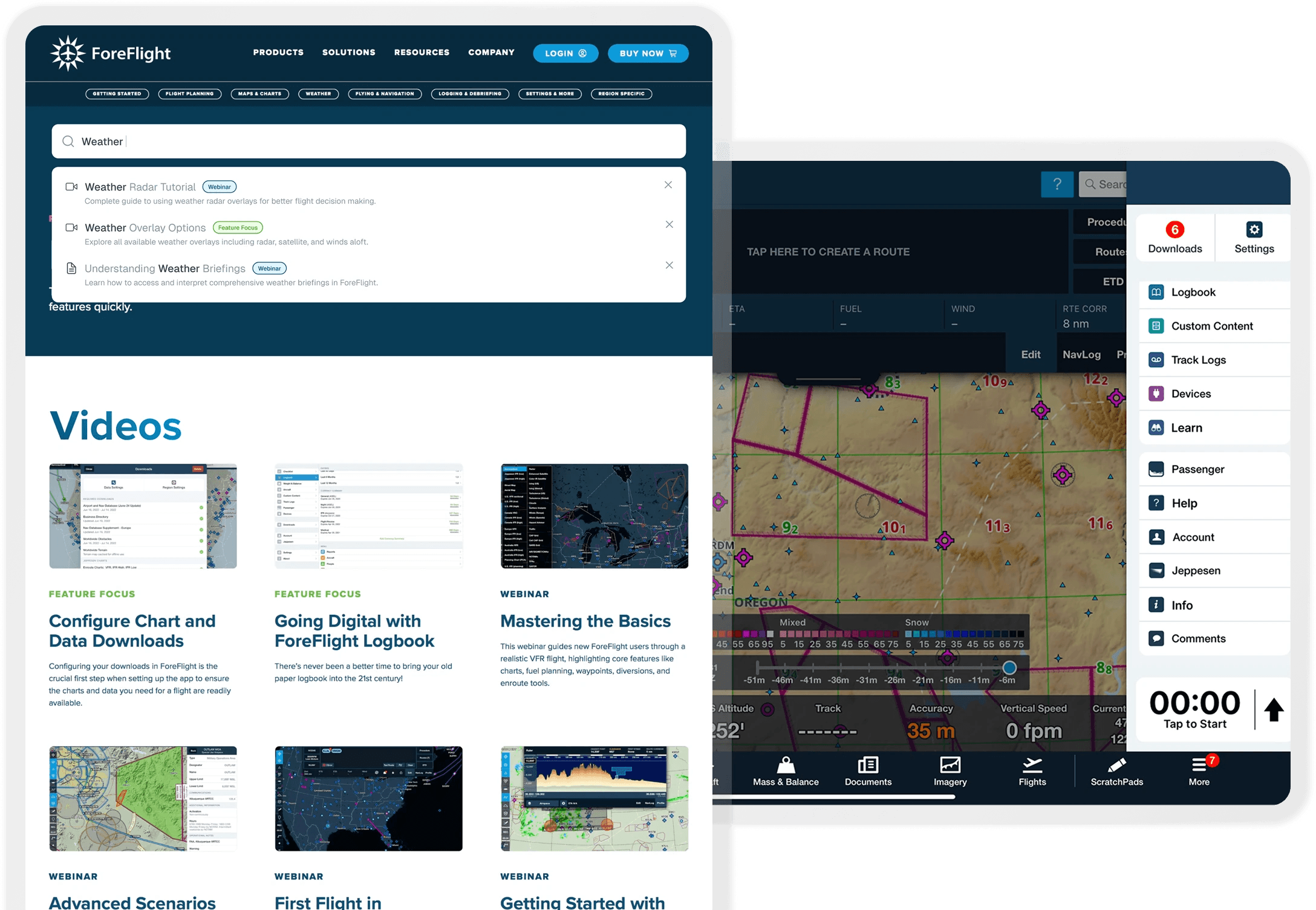
Help is surfaced directly within core workflows, making support easier to access during time-sensitive tasks.
Key feature #2
Structured support with search + browse
Pilots can quickly search to get right support content without relying on trial and error.
The Problem
Pilots struggled to find the right help when issues occurred during flight planning and execution.
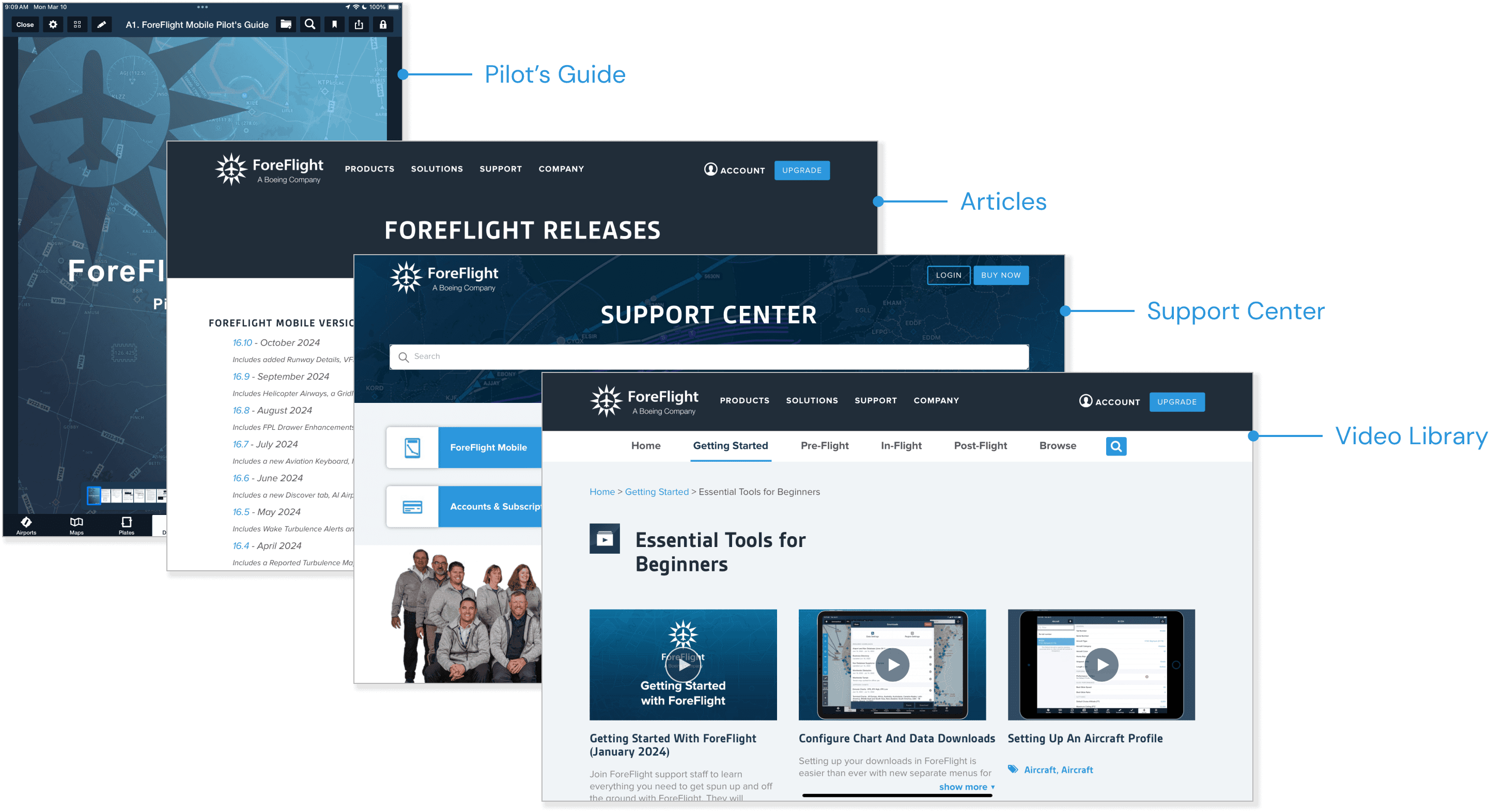
Although ForeFlight provides multiple support resources, help is distributed across different locations, making it unclear where to find the right solution.
Reframing the Problem
Pilots didn't lack support resources. They just couldn't find them.
We initially assumed the issue was the quality of the support resources themselves. As we looked closer at how pilots sought help, we found that the core issue was discoverability.
mapping system
Mapping where support lives…
To understand why discoverability broke down, we mapped how support resources were distributed. We found that: Support existed across many surfaces, but there was no clear way to tell where to start or which resource would help in a given situation.

Constraints
Aviation domain expertise
Support content had to remain technically accurate and aligned with professional aviation standards.
Limited timeline
The project ran for 10 weeks, requiring a tightly scoped and focused solution.
Tablet platform focus
Over 80% of ForeFlight users rely on tablets, so the design focused on the tablet experience.
Within these constraints, we defined an MVP focused on improving the visibility, entry points, and effectiveness of existing support resources.
Key Research Insights
We conducted usability testing with 4 pilots across experience levels, including student pilots, flight school trainees, and general aviation pilots.
1
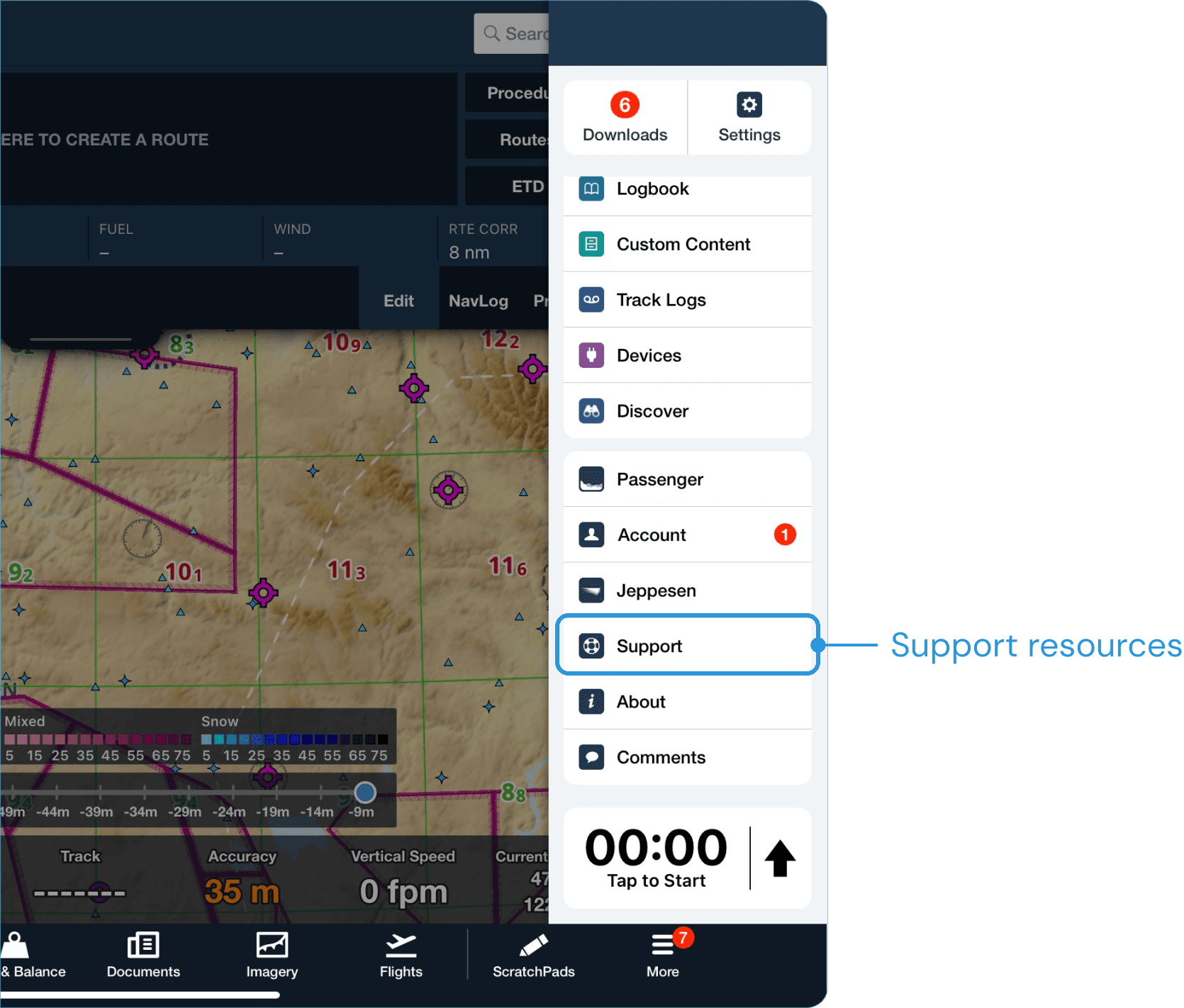
Support was hard to notice when pilots needed help
There’s always the Help menu item. That does not exist in the ForeFlight app, as far as I’ve seen it.
— Commercial Pilot
2
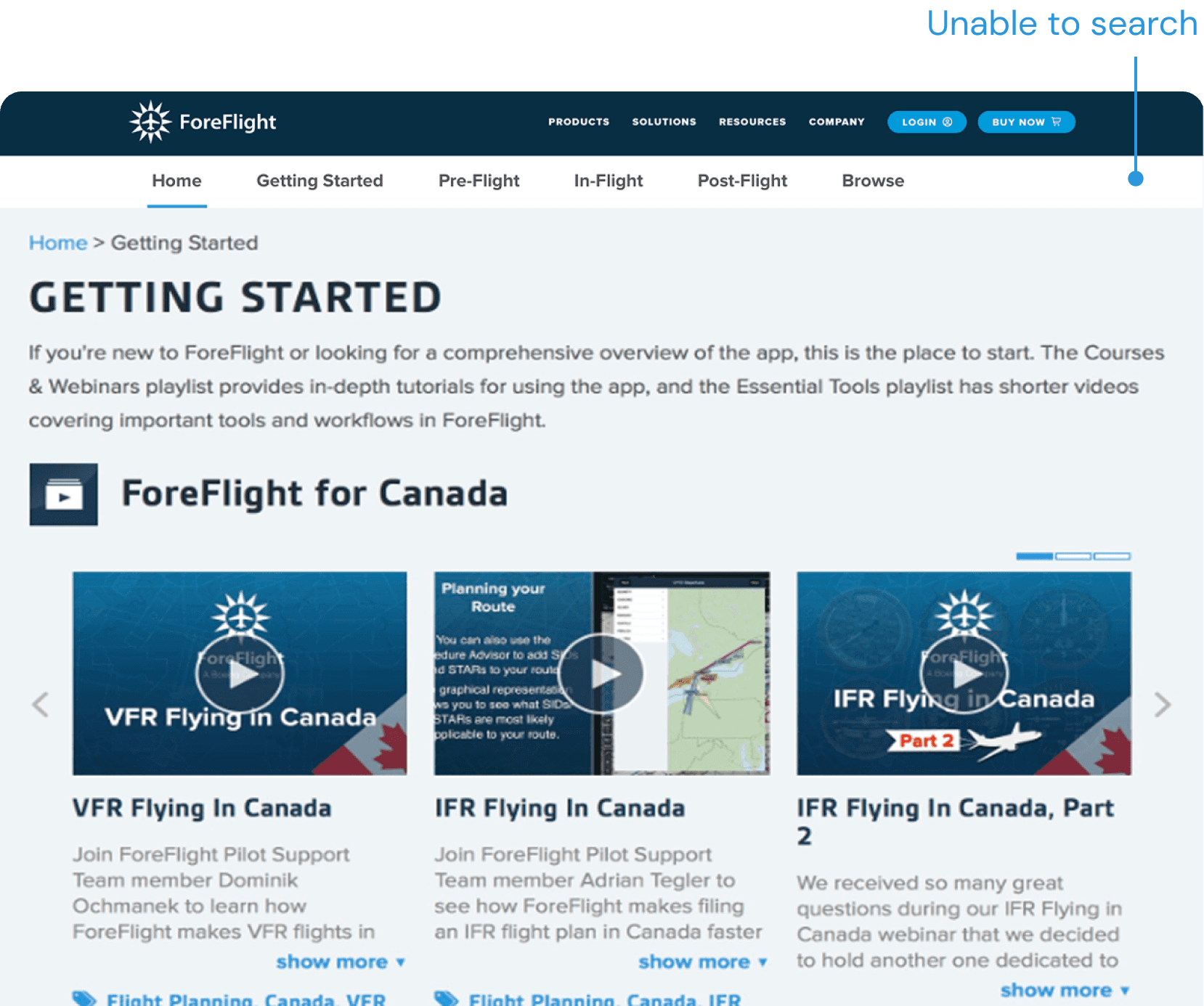
Search was the primary way pilots looked for help, but it often failed them
There’s no search for videos in the ForeFlight library, so it’s easier to just Google it.
— Airline Transport Pilot
Design Goal
How might we help pilots find the right support exactly when they need it?
Design Principles
Deliver lightweight, pilot-controlled support that reduces cognitive load without interrupting high-stakes workflows.
Make help optional, never interruptive
Reduce cognitive load at the moment of need
Match support format to flight phase
Ensure consistency across entry points
MVP Focus: Always-visible help entry point
Iteration
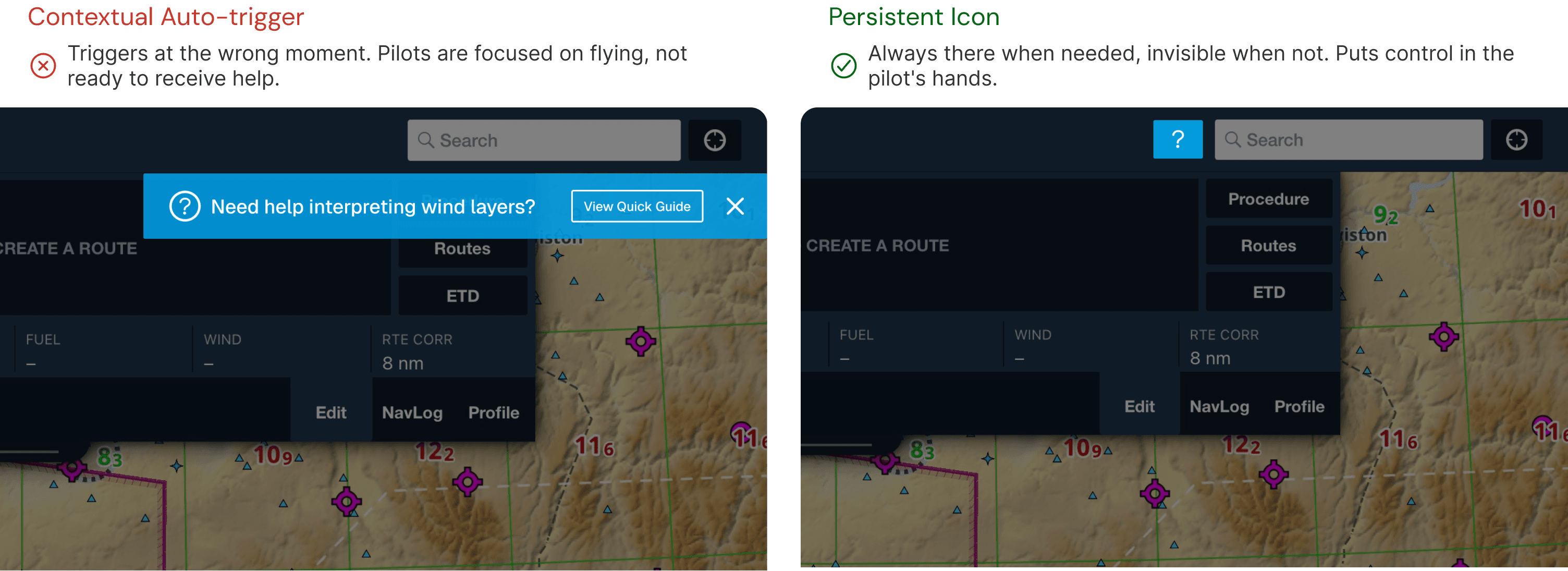
Trade-off: Auto-trigger vs persistent entry
Intentionally avoided auto-triggered contextual help to prevent unexpected interruptions in high-cognitive-load scenarios.
before & After
Make help instantly discoverable across core workflows
Pilots often need help in the moment, but support was buried. I redesigned the entry points to make help visible across core workflows, reducing hesitation when pilots need answers quickly.
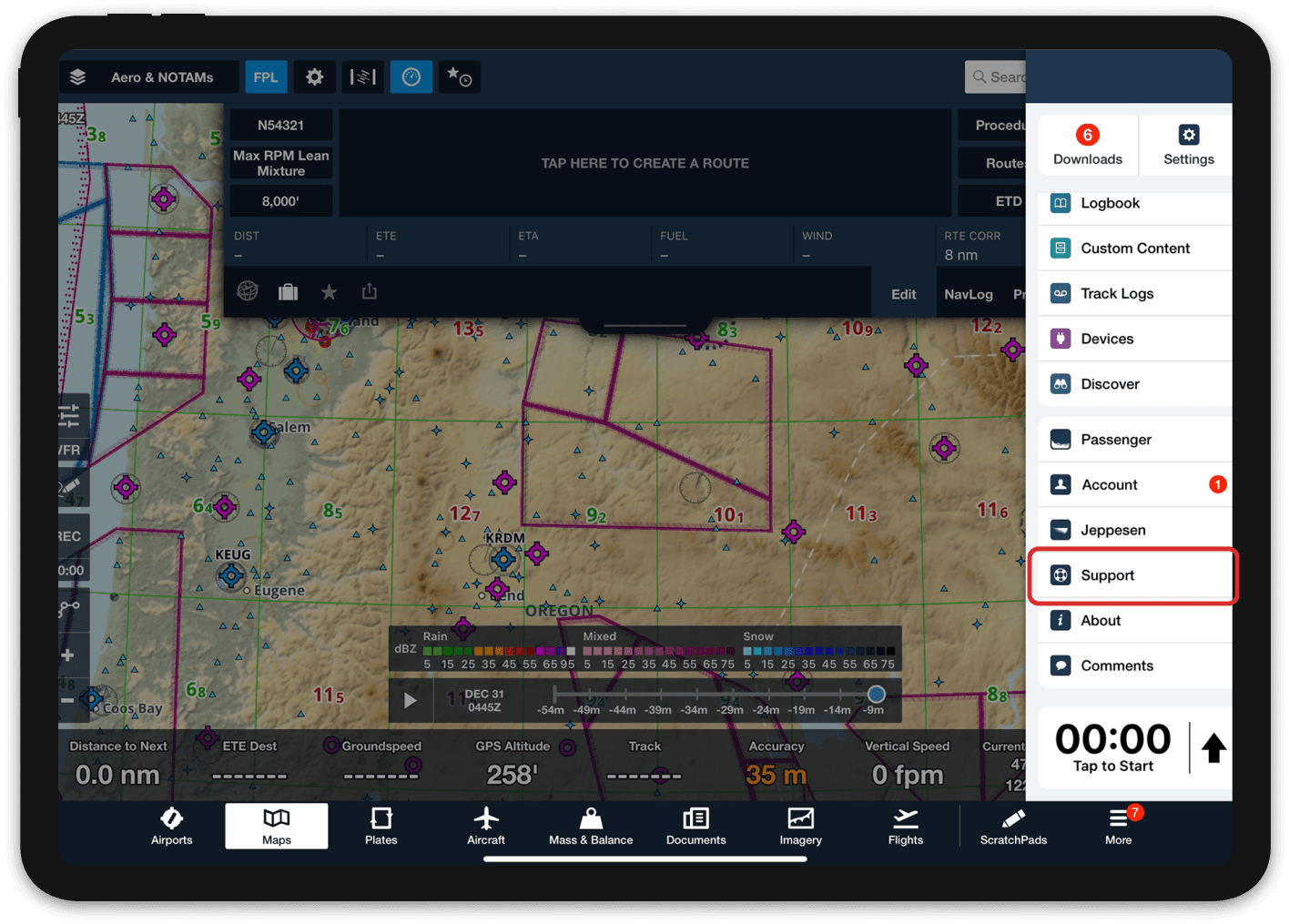
Before

Help entry points were hidden in secondary menus
Support discovery depended on prior knowledge of where help lived
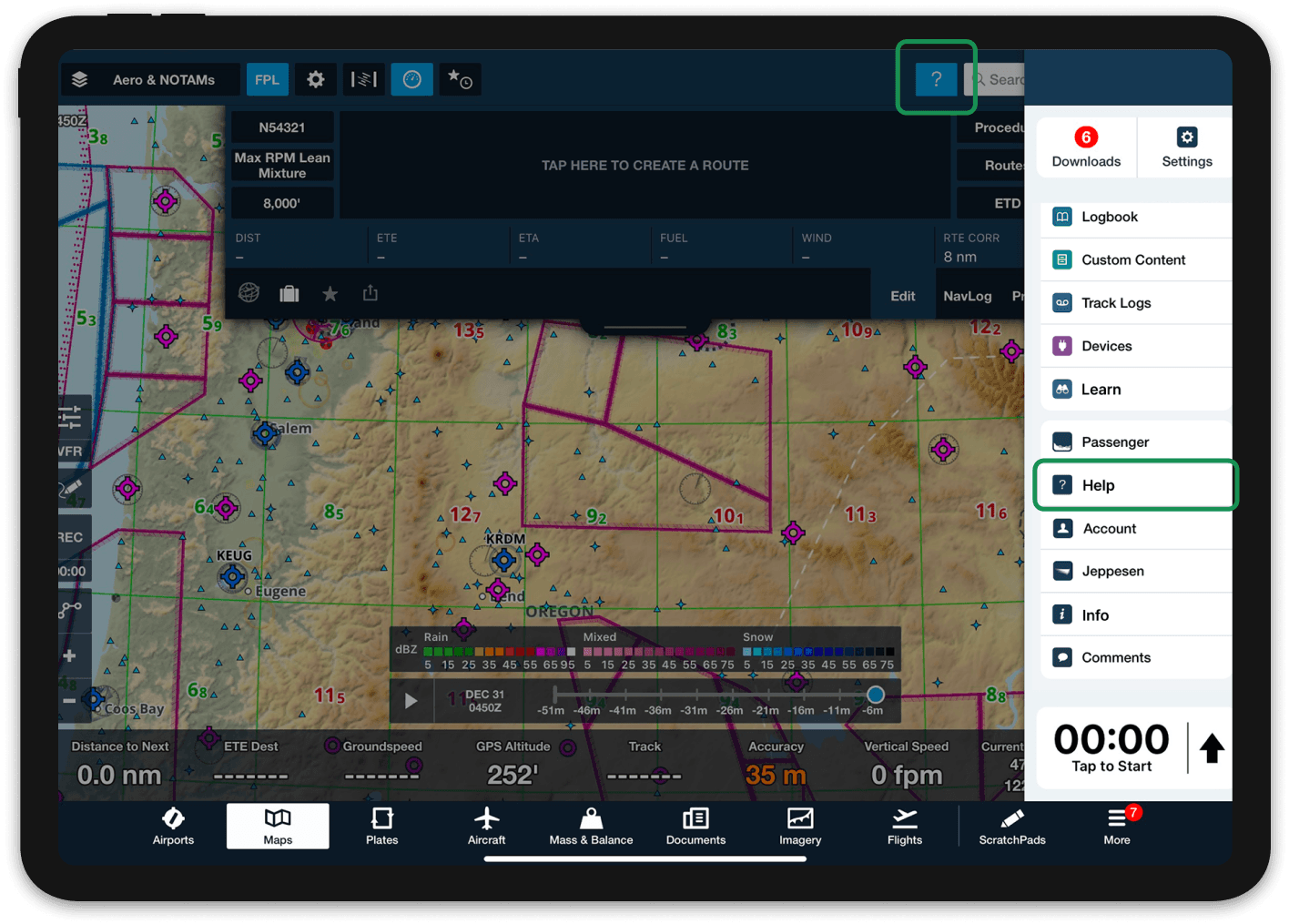
After

Help is surfaced through a clear, always-visible “?” icon
“Support” is reframed as “Help” to better align with how pilots look for assistance
MVP Focus: Structured Search + Browse
Iteration
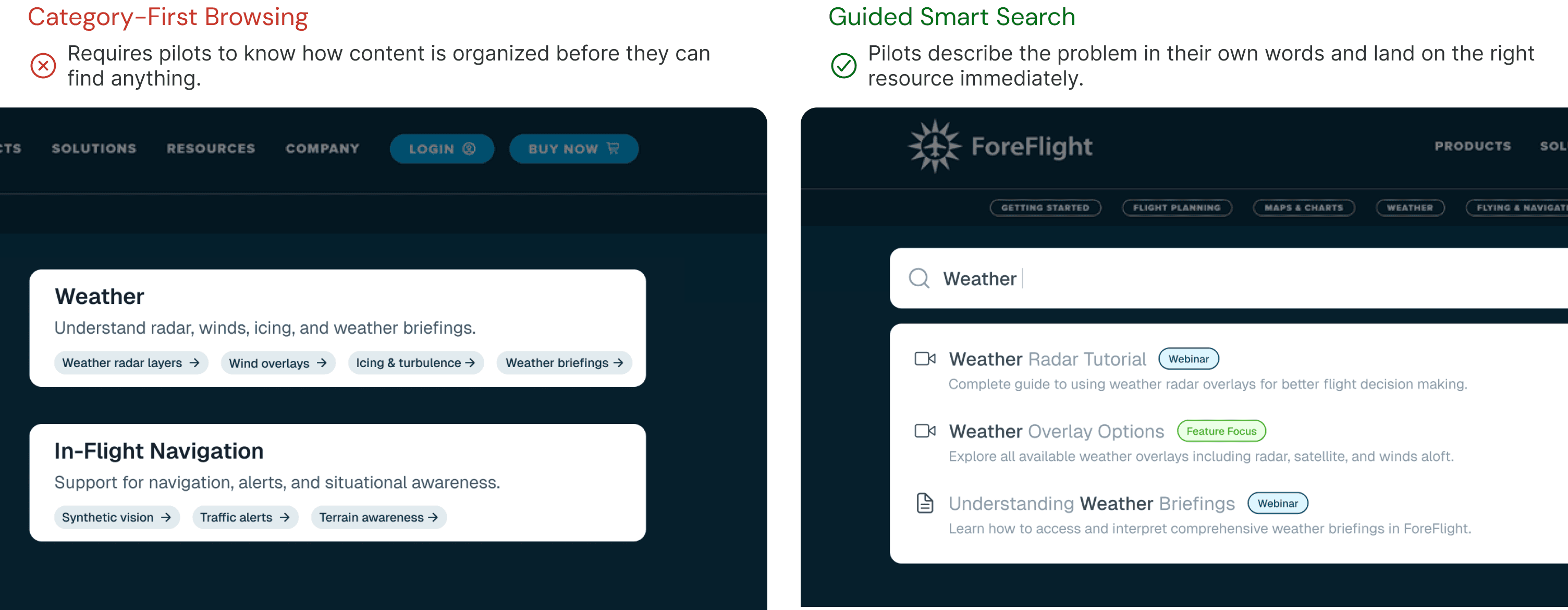
Trade-off: Guided smart search vs category-first browsing
Prioritized guided smart search to reduce cognitive load, since pilots usually know the problem they are facing but not where help is located.
before & After
Support search with a structured and learnable browsing experience
Pilots usually start by searching for help, but search results often felt overwhelming and unhelpful. I redesigned the support to combine search with a structured browsing experience.
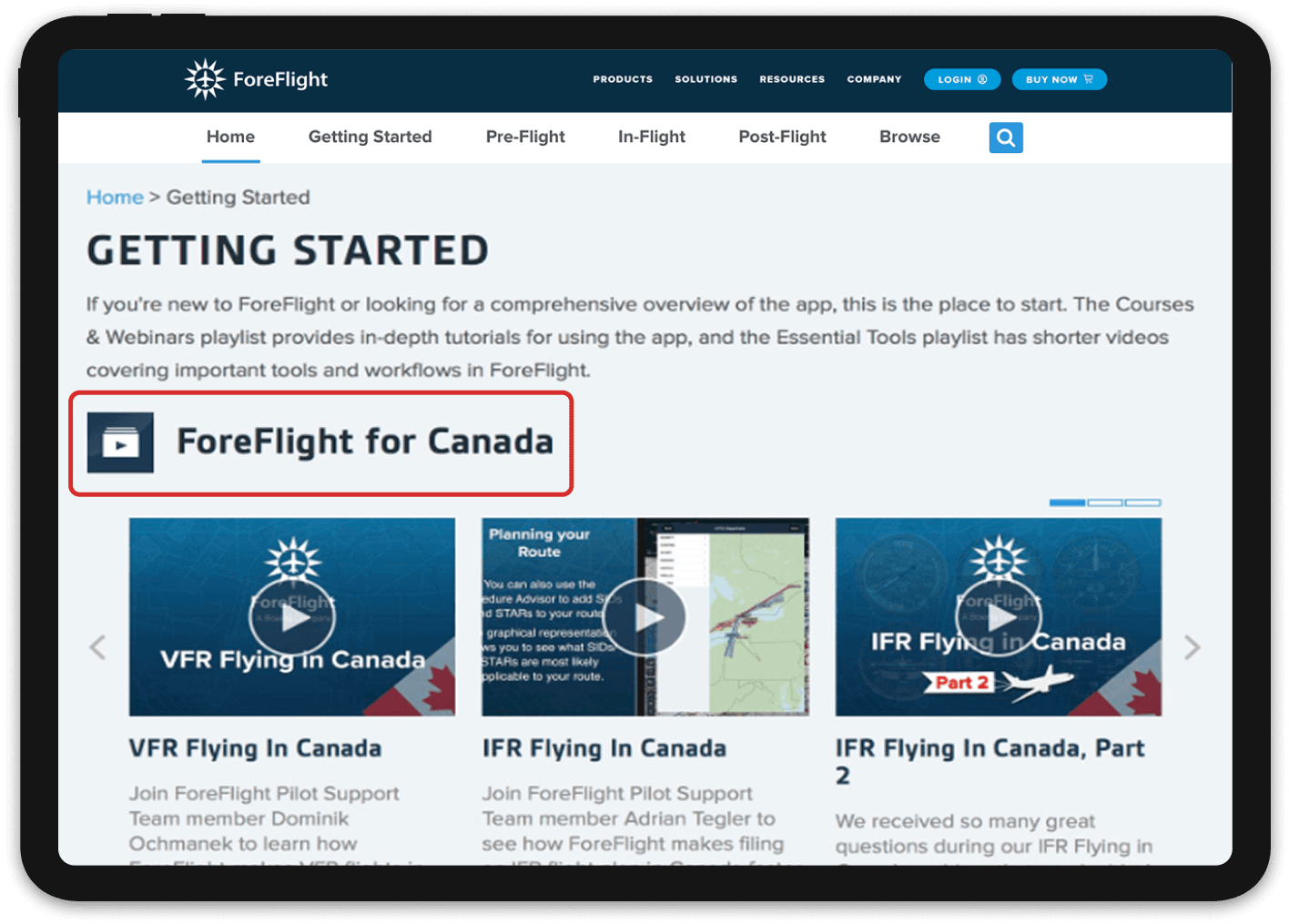
Before
Learning-focused content was buried and hard to identify
Video categories and labels were unclear, making it difficult to know where to start
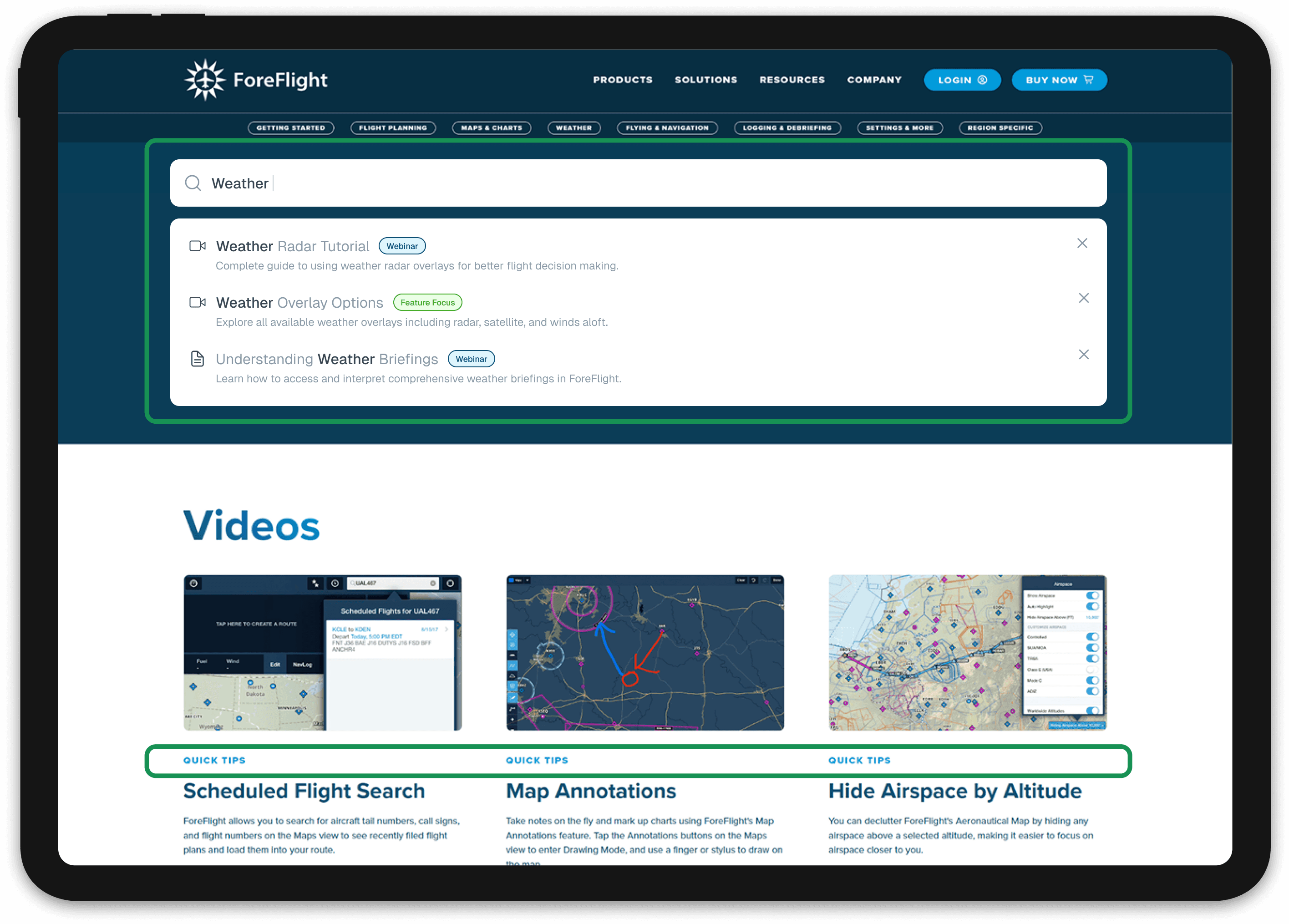
After
Pilots can either search directly or browse with a structured experience
Clear category labels support quick orientation and learning intent
Reflection
Working with constraints
Due to scheduling issues and last-minute drop-offs, we recruited 4 pilots instead of the 7 planned. This limited quantitative comparisons and pushed us to rely more on qualitative insights, reinforcing the importance of adapting research methods under real-world constraints.
If I had more time…
With additional time, we would recruit more pilots across experience levels and better understand how support resources are used over time, helping validate the long-term impact of our recommendations.